This page is designed for a computer screen and is not available on mobile. Please view it on a desktop or laptop.
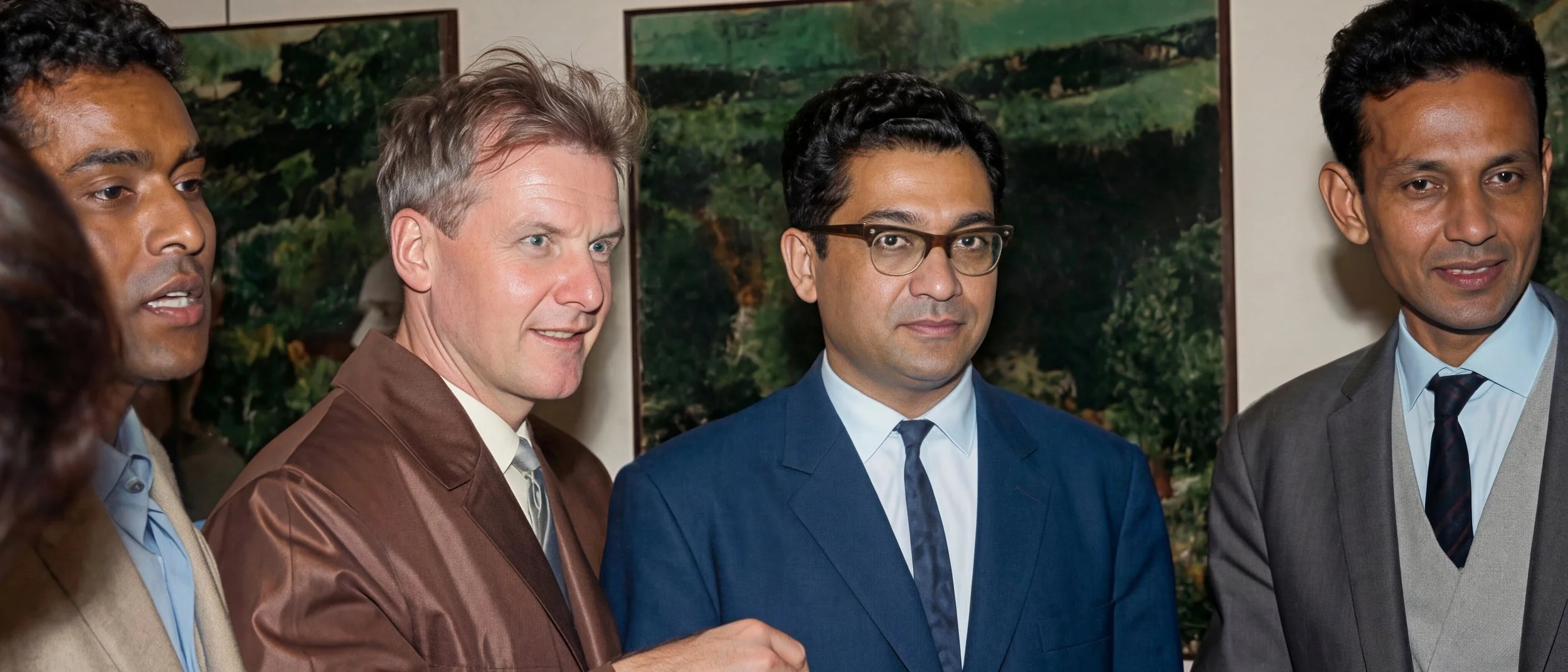
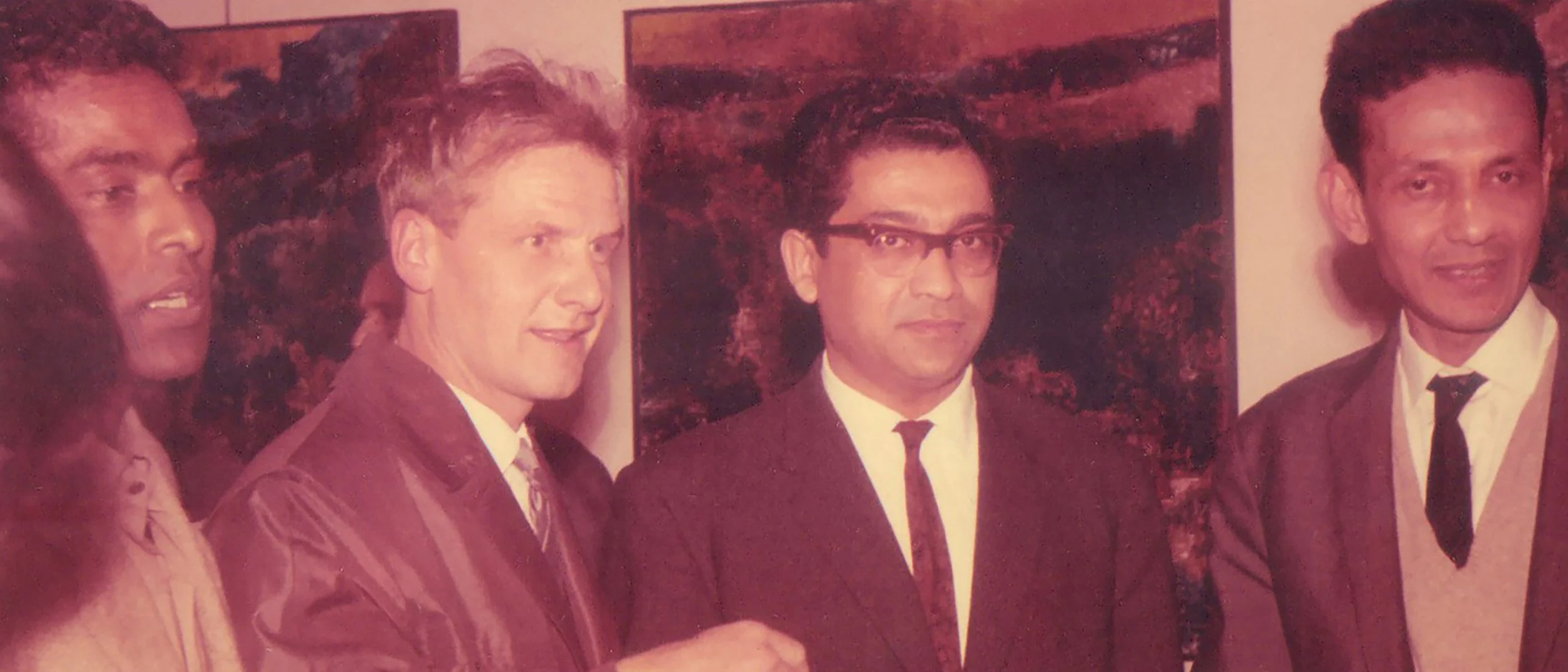
Generative Conservation
A studio method for reconstructing damaged photographs through documentary research, algorithmic constraints, and governed generative Ai.
We restore legibility and print readiness while keeping the photograph compositionally identical and chronologically coherent within its archive.
Abstract
Generative Conservation is a practice based methodology for restoring and reconstructing photographs that survive under conditions of loss, often as damaged prints without negatives or stable reproduction chains.
The work combines documentary research and historical photographic knowledge with algorithmic constraint design and generative AI used as a reconstruction instrument under governance. A central construct is the eidetic photograph, an intermediate reference state that brings the image as close as possible to human vision before any period coherent photographic style is applied.
Case studies from the Akbar Padamsee archive demonstrate how missing elements can be recovered through documentary cross referencing and how verified colour information can be reinjected into black and white sources, enabling exhibition and publication outputs that remain coherent with archival chronology. In this context, I would like to thank Bhanumati Padamsee for her support and time.
Key terms
-
Generative Conservation is a documentation led, practice based method for reconstructing photographs that survive under conditions of loss. It treats generative AI as an instrument inside a governed workflow, producing candidates that are accepted or rejected against evidence, photographic knowledge, and explicit constraints.
The term generative is used in the strict sense from generative art and generative AI: outcomes emerge through a process, rules, iteration, and selection, not as a single pass effect. The conservation component names the discipline that limits what can be inferred and requires that interventions remain legible and documented.
-
The term eidetic derives from the Ancient Greek eidos (εἶδος), meaning form or appearance, literally “what is seen”, and is related to idein (ἰδεῖν), “to see”. In philosophical usage, eidos can also refer to the intelligible form or essence of a thing, the idea of an object as it is grasped in its defining structure rather than as a partial fragment.
We use the term to name an intermediate reference state created by the pipeline: a photograph brought as close as possible to a coherent perceptual vision of the scene while keeping composition, placement, and structure fixed. It is the point where reconstruction aims to recover not only legibility, but the internal coherence of the moment as it could have been seen.
This reference state matters because it stabilises the record before any stylistic inscription is applied. Once the eidetic photograph exists, period coherent style variants can be produced downstream without rewriting the underlying photograph, and the archive retains a single anchored reference that can support multiple curatorial outputs.
-
A period coherent style variant is a downstream photographic inscription that makes the final image read consistently with a chosen historical technique and archive chronology. It can simulate period film response, grain structure, contrast behaviour, black and white rendering, or print and toning characteristics, as a deliberate and documented decision.
The key point is sequence and control: the eidetic photograph stays the reference, and the style variant becomes a governed output layer. This keeps coherence across a corpus and prevents the reconstruction process from drifting into anachronistic or generic contemporary looks.
-
A governed pipeline is a reconstruction workflow where models do not decide what is true, they propose, and the studio governs. Governance means constraints, acceptance criteria, rejection loops, and documentation that records what was reconstructed, what remained invariant, and what evidence bounded plausibility.
In practice, governance is what makes the work usable in an archival and curatorial context. It turns generative capacity into a controlled reconstruction method with accountability, rather than an aesthetic transformation.
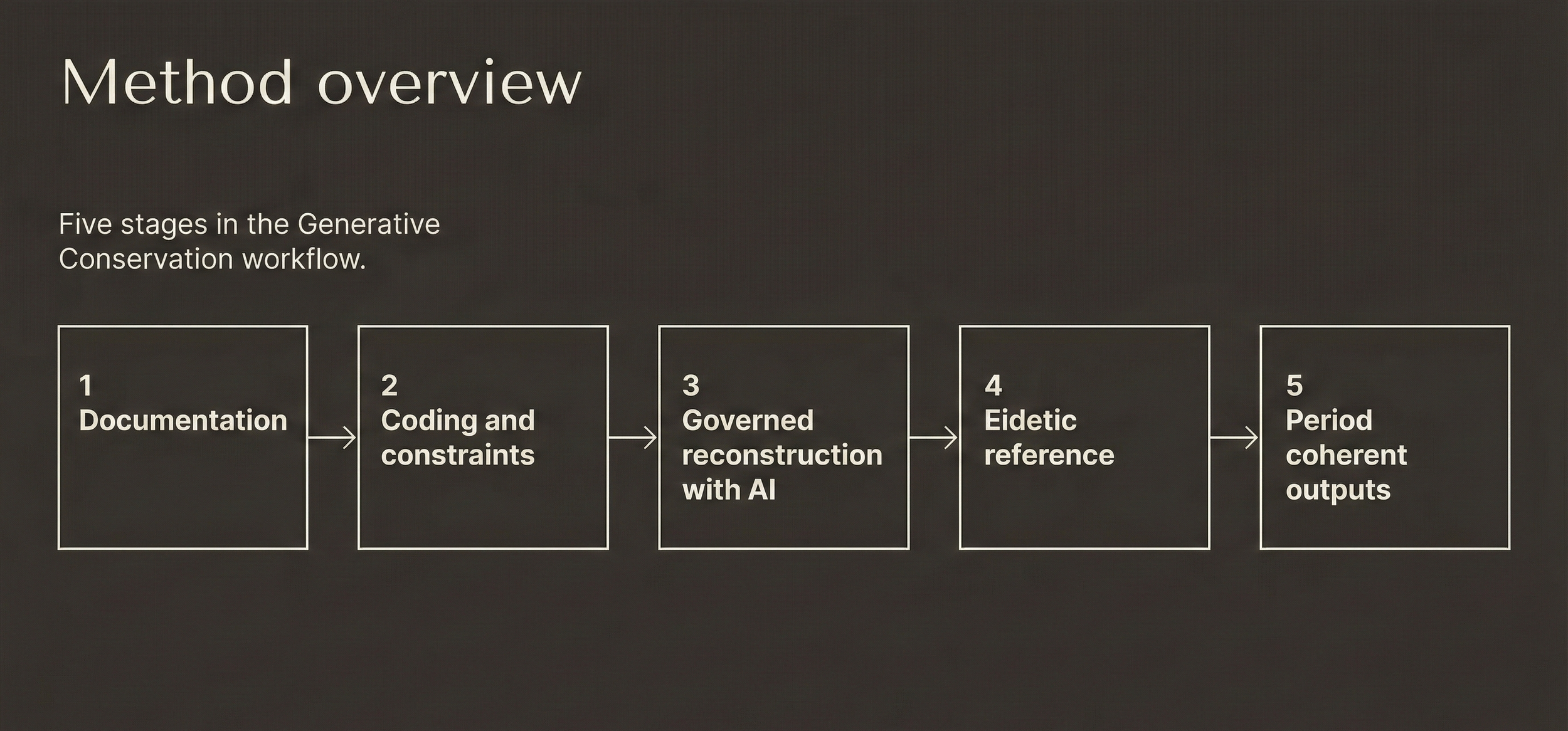
1- Documentation
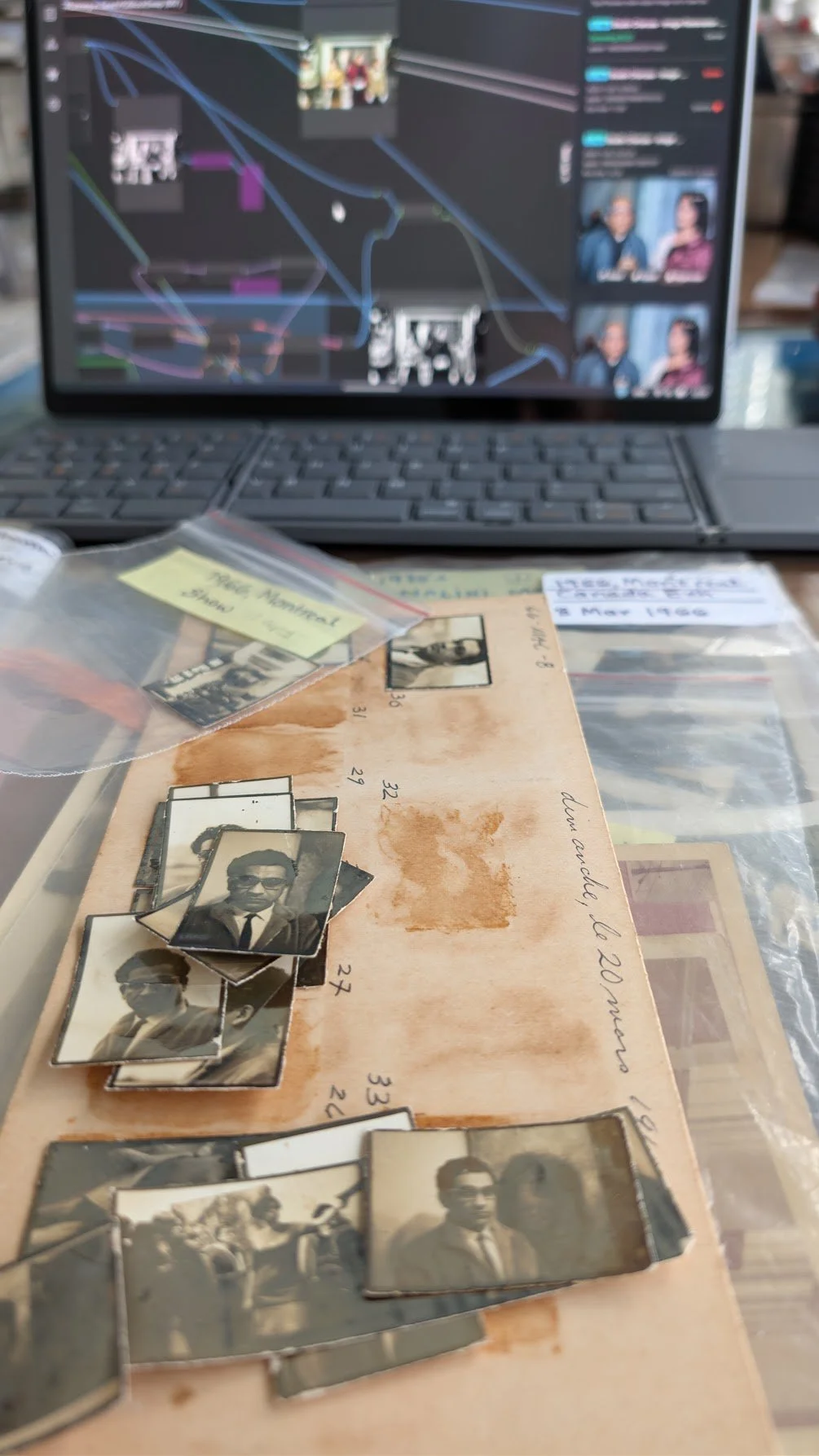
We assemble visual and textual references that bound what is plausible: alternate prints, catalogues, studio photographs, film documentation, and written descriptions that specify objects, spaces, and light.
2- Coding and constraints
We translate research into constraints that preserve invariants, especially composition and internal geometry, and reduce the degrees of freedom available to the model.
3- Governed reconstruction with AI
Generative models propose candidates for missing or degraded regions, but outputs are accepted only when consistent with constraints, references, and continuity checks.
4- Eidetic reference
We produce a stable intermediate image that prioritises perceptual coherence: readable light, continuous surfaces, and recoverable detail, while remaining structurally congruent to the source.
5- Period coherent outputs
From the same eidetic reference, we generate style variants aligned with historical photographic technologies so the final prints sit credibly within the chronology of an archive, a book, or an exhibition.
2. The method as a pipeline
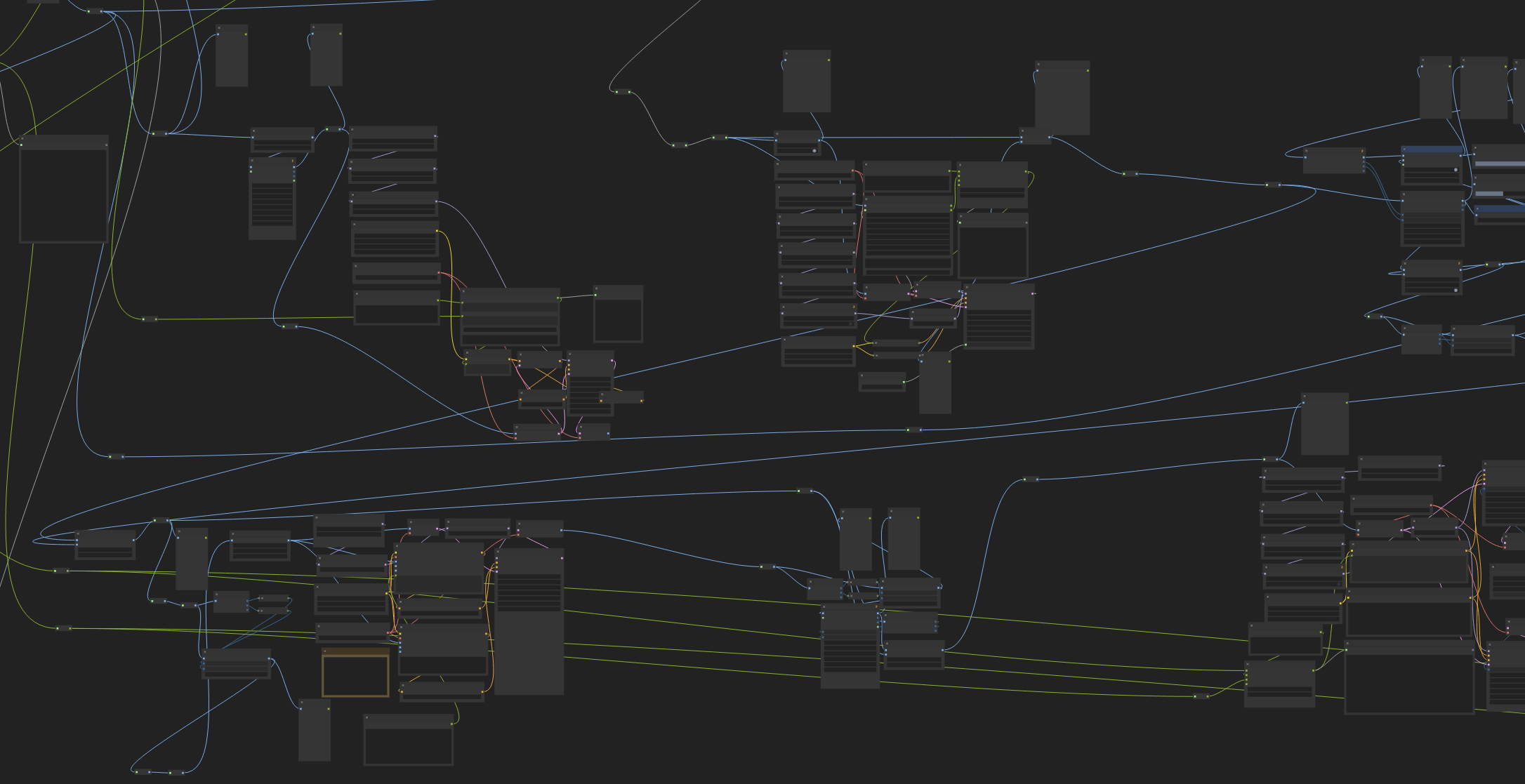
We maintain a model agnostic pipeline, flexibly combining open source and proprietary systems, so the method stays adaptable and aligned with the state of the art rather than tied to any single model.
-
The pipeline is intentionally model agnostic. We use open source and closed source systems interchangeably, selecting tools for the specific technical problem at hand, while keeping the governing method stable. This is a practical design choice: the technology moves quickly, so long term quality comes from workflow governance rather than attachment to a single model.
The difficult part is not generating a plausible image, it is keeping the same photograph stable while models naturally drift. The code and control layers exist to keep invariants locked: composition, geometry, proportions, placement, and the internal logic of light and materials. In other words, we use engineering to prevent the reconstruction from becoming a new photograph.Coding also enables repeatability and review. It allows structured iteration, consistent constraints across revisions, versioning of decisions, and a controlled way to integrate evidence and manual judgement into model outputs. The goal is a reconstruction process that can be audited, refined, and applied at corpus scale.
-
Governance starts with a constraint hierarchy. Documentary sources and material evidence bound what is plausible. Photographic knowledge governs what is physically and historically credible. Aesthetic preference sits last, and only operates inside what the evidence allows.
Constraints are made operational through acceptance criteria. The pipeline rejects outputs when composition drifts, when objects mutate, when lighting logic becomes implausible, when texture and material cues contradict the period, or when the reconstruction introduces visual claims that cannot be supported. This rejection loop is part of the method, not a side effect.
Finally, governance requires explicit boundaries of inference. The workflow distinguishes what is confirmed, what is inferred within bounds, and what remains unresolved. Those boundaries are recorded so the reconstruction stays responsible to the archive.
-
Documentation is the primary driver of plausibility. We assemble visual and textual references that bound what can be reconstructed: alternate prints, catalogues, studio photographs, film documentation, and written descriptions that specify objects, spaces, and light. These references act as constraints, reducing free invention and keeping the work anchored.
Verification is triangulation. The pipeline cross checks reconstruction decisions against multiple sources wherever possible: object identity, scale, placement, and lighting cues are tested against documentary material and internal consistency rules. When certainty is not available, the workflow records the uncertainty and limits the reconstruction accordingly.
In some cases, the most useful documentation is moving image material. Documentary footage of a studio can reveal prop identities, spatial layouts, and lighting cues that no longer survive in the damaged print. These discoveries can then be reintegrated into the still image with consistent perspective and lighting logic.
3. Case study I, reinjecting verified colour into a black and white photograph
In one photograph, the depicted artworks were recorded only as black and white tonal values, yet their original colours were recoverable through external documentation. We researched the historically correct colours and surface behaviour of the artworks and reinjected this verified colour information into the photograph while keeping composition and spatial alignment fixed. The colour reconstruction was then integrated into the same governed pipeline, allowing the image to remain structurally identical to the source while becoming readable and printable at scale.
Source photograph, black and white record
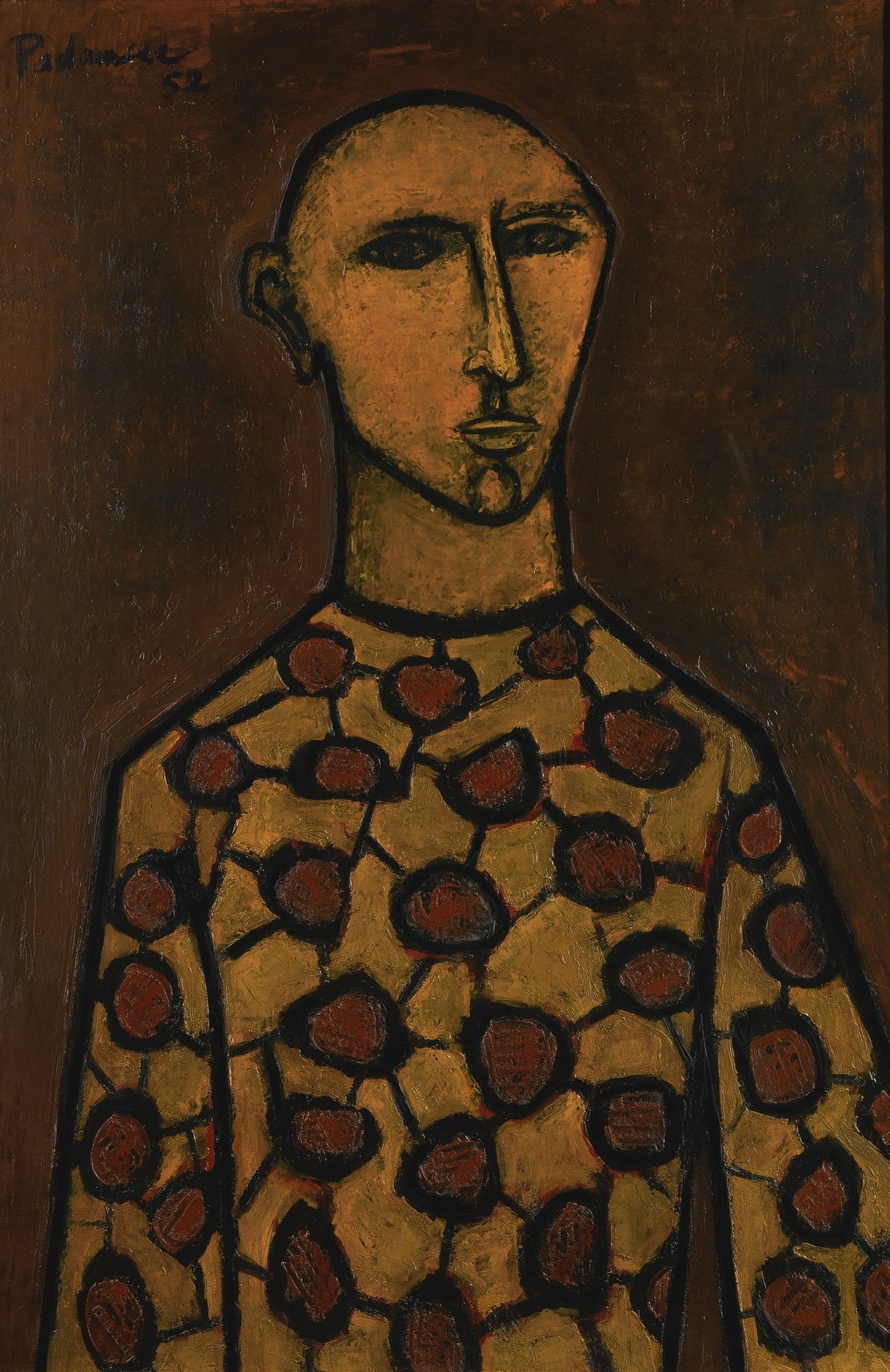
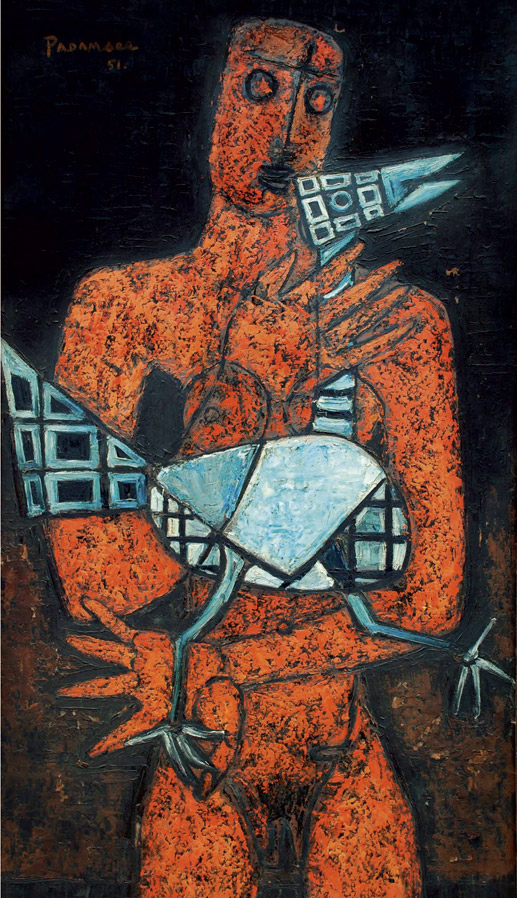
From left to right, the paintings are The Prophet (1952), Prophet I (c. 1952), and Woman with Bird (Femme à l’Oiseau) (1951).
This photograph was taken in Akbar Padamsee’s own Paris studio around 1951–52, during his first years in Europe. The image has the qualities of a staged portrait, likely made for a magazine or press feature, showing him surrounded by the key works of his early Paris period. It documents a moment when he was consolidating his artistic identity in France, shortly after gaining recognition for Woman with Bird, and reflects how he presented himself and his work to an international audience at the start of his career.
Eidetic reconstruction, Colour reinjection, verified artwork colours applied
This case illustrates the separation of tasks within Generative Conservation. First, the photograph is brought to an eidetic reference state that supports readability. Second, historically and documentarily grounded attributes can be reintroduced where they are verifiable.
This version is rendered to emulate an early 1950s photographic chain: a fine grain panchromatic negative response (ILFORD Pan F ) translated into a contrast forward silver gelatin studio print with selenium toning.
The eidetic output was built by reinjecting verified colour into the paintings, then inferring a coherent overall colour response and introducing a warm hue consistent with the kind of studio lighting likely used for a magazine shoot. Fine material cues such as paint surface, jacket fabric, and skin texture were restored and calibrated to the sitter’s age in that period. This matters because an eidetic photograph depends on perceptual credibility: colour, light, and micro texture must read as one continuous optical event, so the image approaches what the photographer and subject would have experienced, without altering composition or turning reconstruction into interpretation.
This version is rendered to read like a full page 1950s French illustrated magazine reproduction in héliogravure: process colour is constrained to a narrower magazine gamut, highlights sit on a warm paper white, and the tonal scale is softened so yellows cluster and blues read muted.
Research note
-
Colour is not treated as an aesthetic layer added after reconstruction. It is treated as a reconstruction input that supports rephotographing the moment. To bring a photograph back toward lived perception, the pipeline often needs a plausible chromatic model of the scene, even when the final output is black and white. Without this step, tonal relationships can become generic and materially wrong.
This matters because black and white is not colour neutral. Black and white films have spectral sensitivity, and the same subject can render differently depending on wavelength response. Recovering plausible colour relationships improves tonal separation and material legibility: skin, fabric, painted surfaces, foliage, and studio objects behave differently once the underlying chromatic structure is coherently reintroduced.
Downstream, historically coherent controls can be applied as governed choices. This includes simulating period filtration such as yellow or orange filters, which alter tonal mapping in predictable ways and can be appropriate to specific photographic contexts. These decisions remain bounded by research and are documented as part of the reconstruction chain, rather than introduced as untracked stylistic effects.
4. Case study II, Polaroid reconstruction from studio documentation
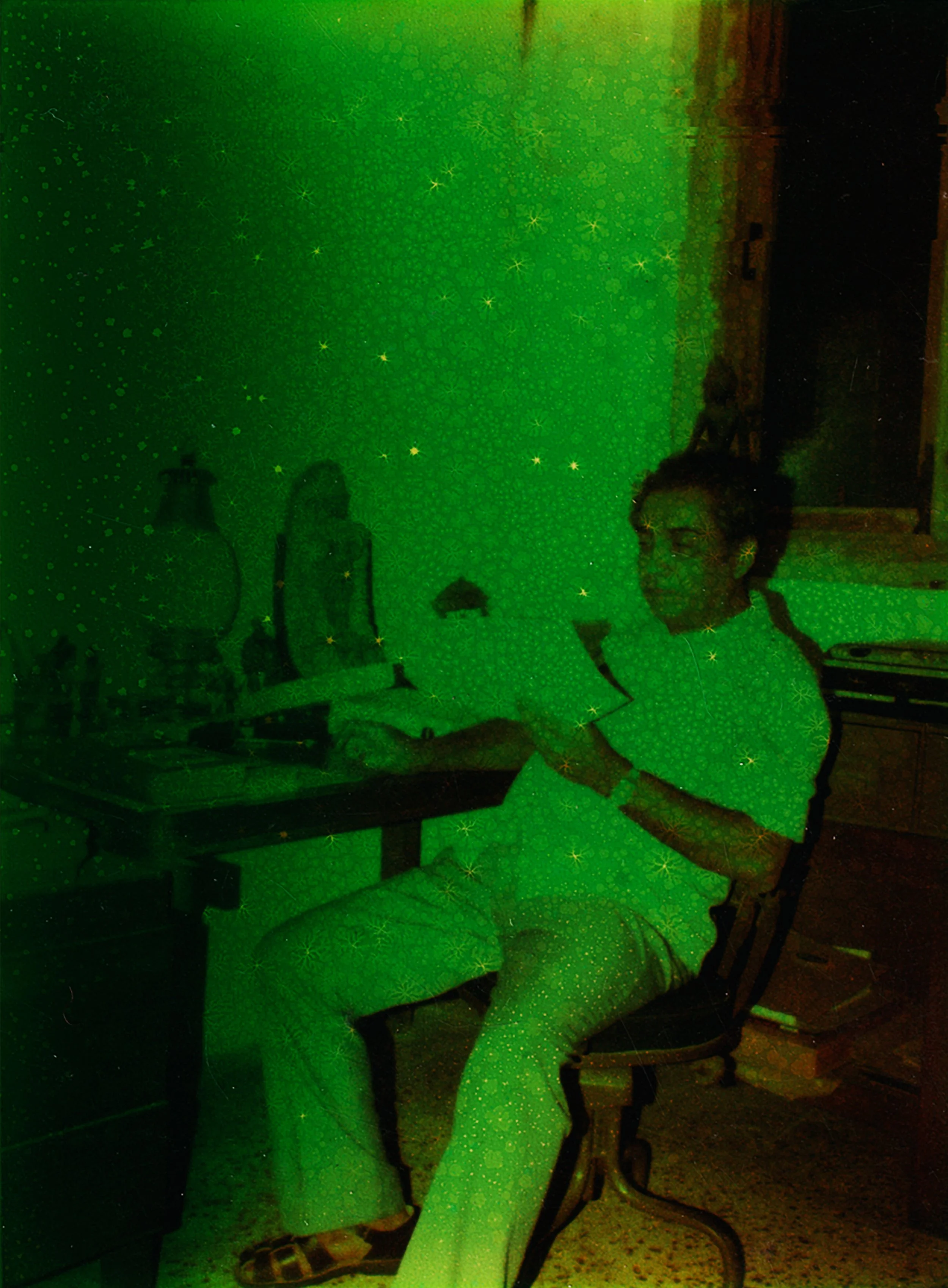
A severely degraded Polaroid from the archive had lost key elements and could not be made readable from the print alone. During documentary research, we located Akbar Padamsee and the Last Image, a film that includes sequences inside the artist’s studio. Two missing objects, a lantern style glass globe lamp and a standing figurative sculpture, could be identified and reconstructed from this reference. The restoration then reworked the lighting logic of the scene, reducing the harsh Polaroid flash and rebuilding a warmer lamp motivated illumination, while keeping composition, perspective, and object placement strictly aligned to the source photograph.
Source Polaroid, degraded print condition
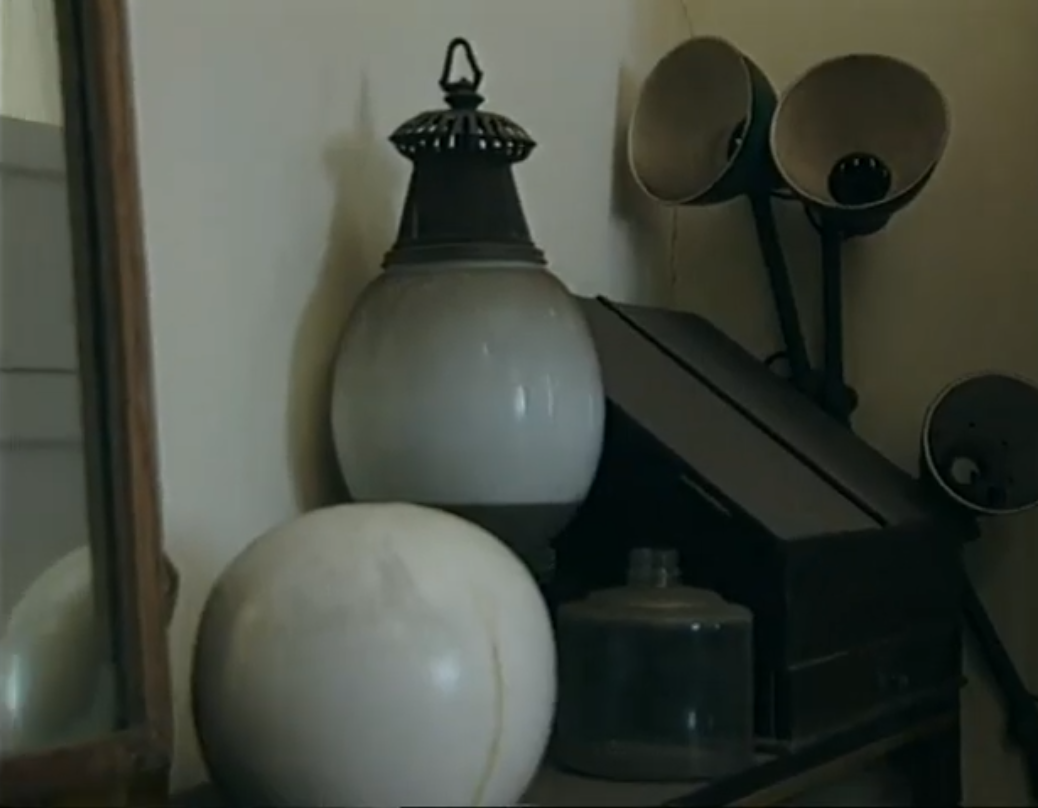
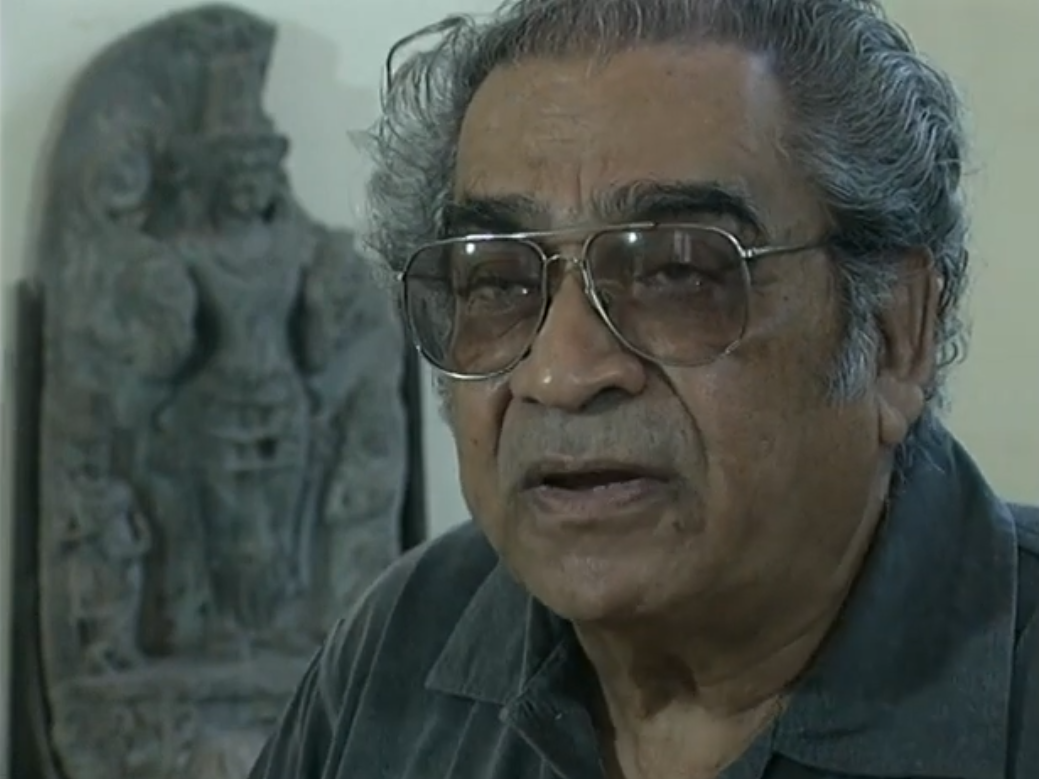
Cross referencing Akbar Padamsee and the Last Image, a documentary that includes sequences inside Akbar Padamsee’s studio, we identified the missing lantern style glass globe lamp and the standing figurative sculpture, and reconstructed them into the restored Polaroid using the film reference.
Eidetic reconstruction, composition locked, legibility restored
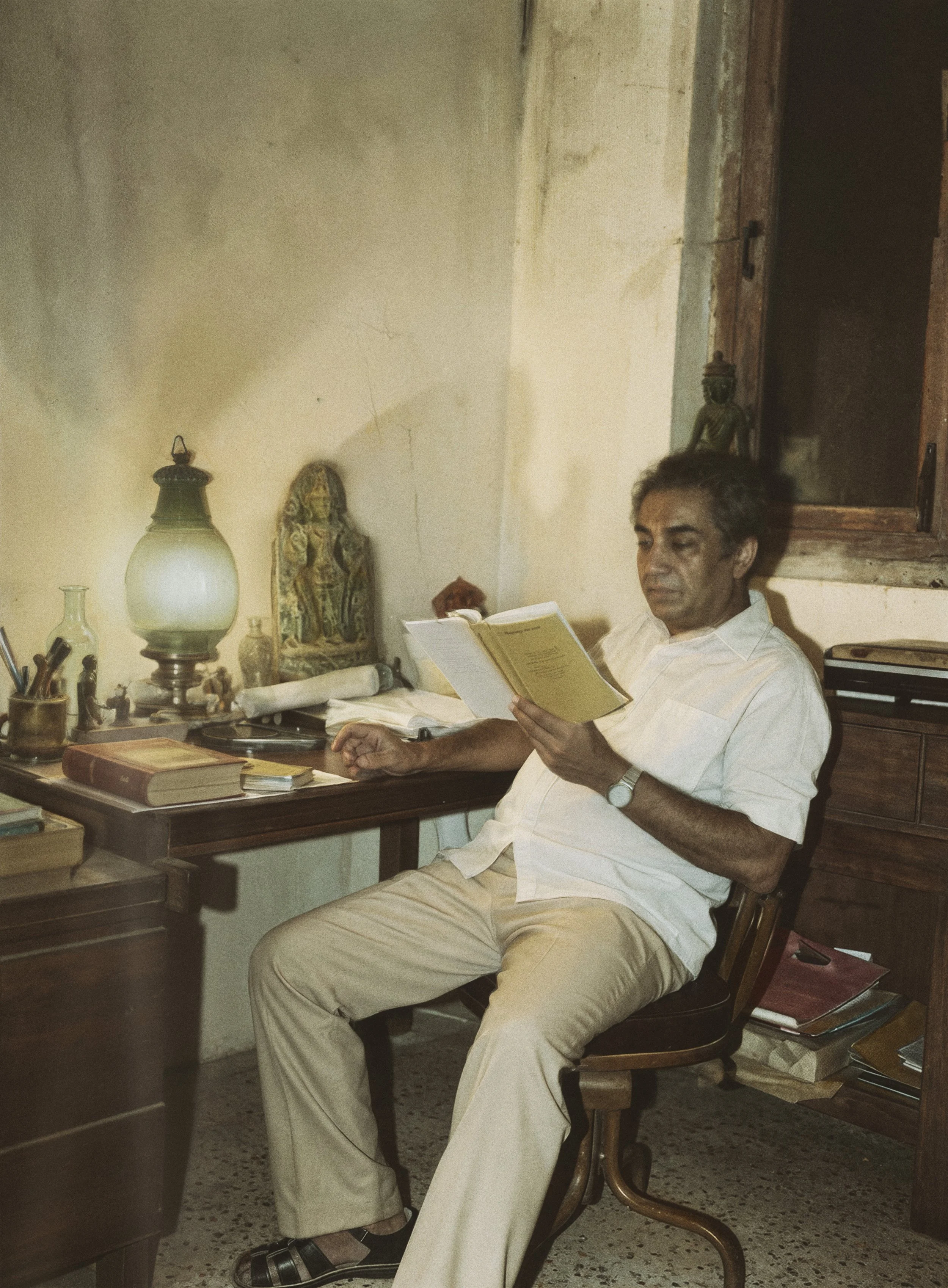
A final variant was then produced to emulate the original output technology: a Polaroid print look consistent with early 2000s consumer instant film, so the restored photograph can be presented within the same material language as the now too deteriorated original.
We then produced the eidetic reconstruction by reworking the lighting logic of the scene, reducing the harsh direct Polaroid flash, and rebuilding a warmer, localised illumination motivated by the table lamp. The lamp and the figurative sculpture were reconstructed and reintegrated with consistent perspective, scale, and occlusion, and their shading was aligned to the same light field so the restored elements sit physically inside the photograph rather than reading as additions
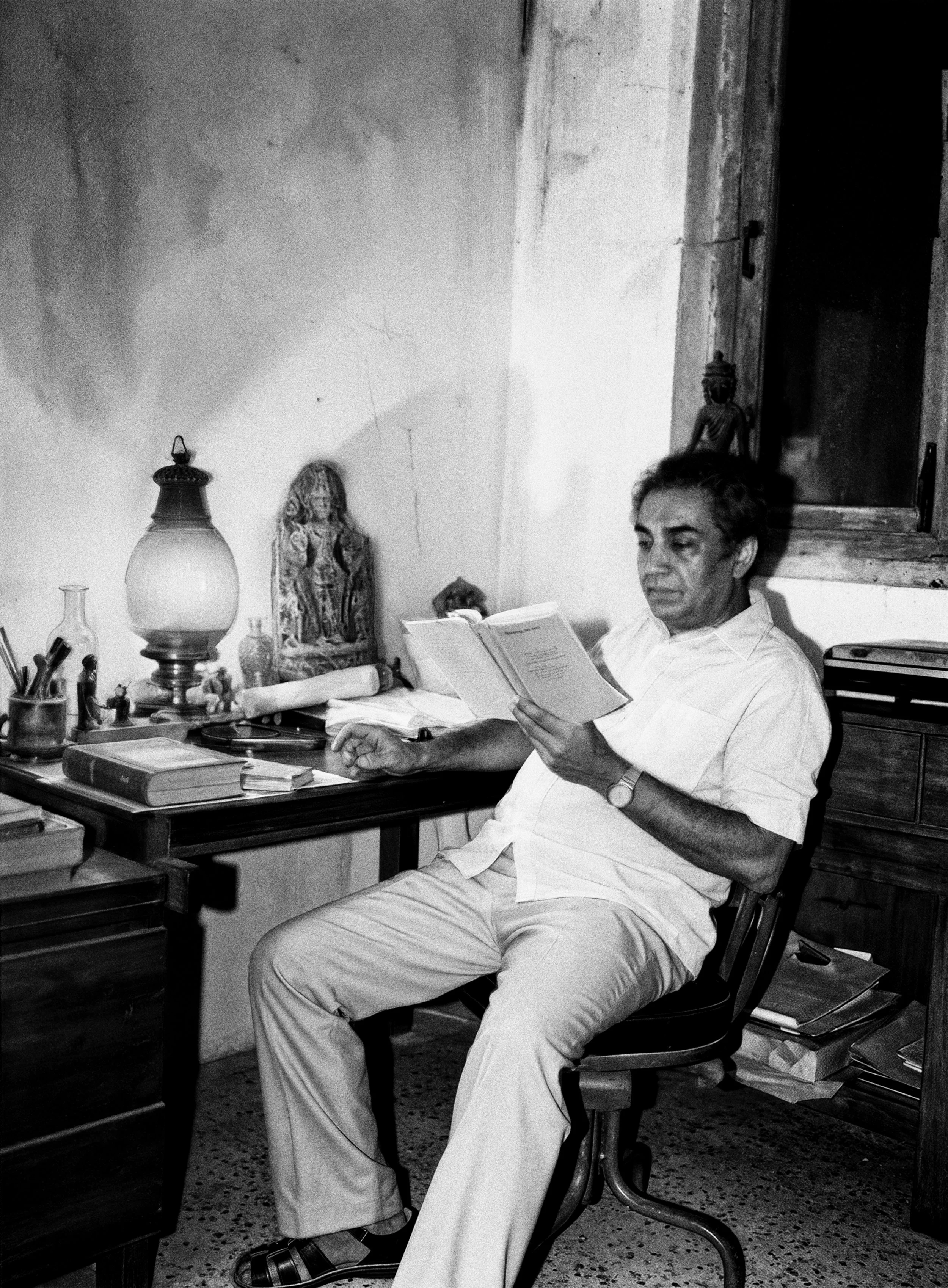
A second variant was produced to emulate a low light documentary rendering: a Kodak Tri X 400 response pushed to 800, to reflect the grain and tonal compression associated with limited film speed in dim interior conditions.
-
Some photographs contain lighting artefacts that are technically present in the material but perceptually distort the lived scene, particularly direct on camera flash. Basic flash units can flatten depth, crush ambient lighting cues, and overwrite the lighting ecology of a space. In those cases, leaving flash dominant can pull the image away from an eidetic reconstruction of the moment.
The pipeline can therefore include a decision to reduce or negate flash influence and reconstruct motivated lighting consistent with the depicted environment. This is not a beautification step. It is a fidelity step aimed at recovering a plausible perceptual lighting state, where local light sources and ambient gradients remain legible.
Reintegration work is governed by consistency rules. Any reconstructed objects or restored regions must respect perspective, scale, contact points, and shadow logic, and must sit inside a single coherent lighting model. The aim is that the final image reads as the same photograph, not as a new staging of it.
5. Style variants as outputs
Style variants are generated downstream from the eidetic reference and do not alter the reconstruction baseline. Their function is curatorial and archival: to produce prints that read credibly within a period and remain coherent inside the chronology of a corpus.
Scanned Print
Provia 160 VC - E6 Process
Eidetic Photograph
Ilford FP4 Plus 125 in 120 medium format - Sepia Toning
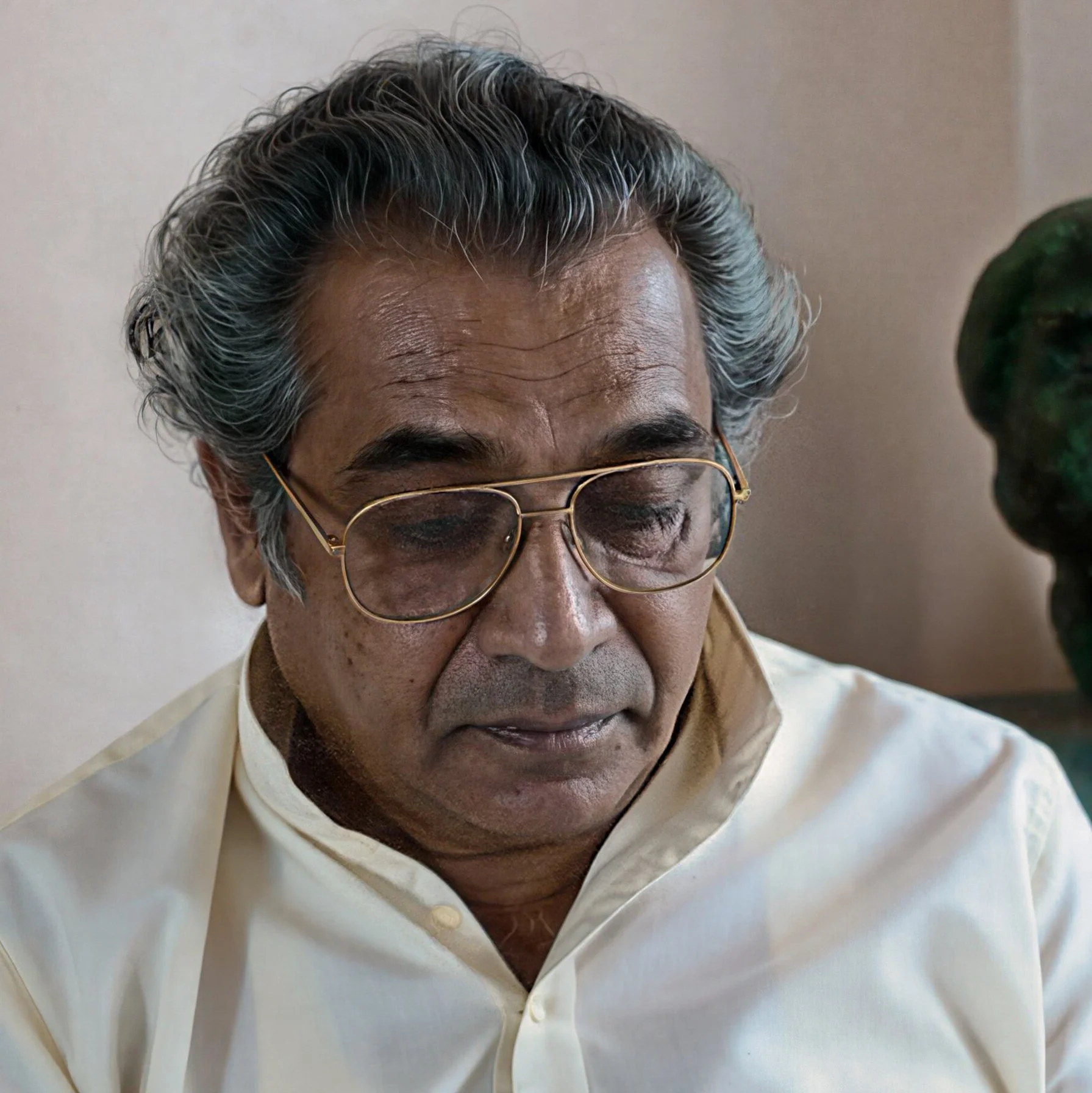
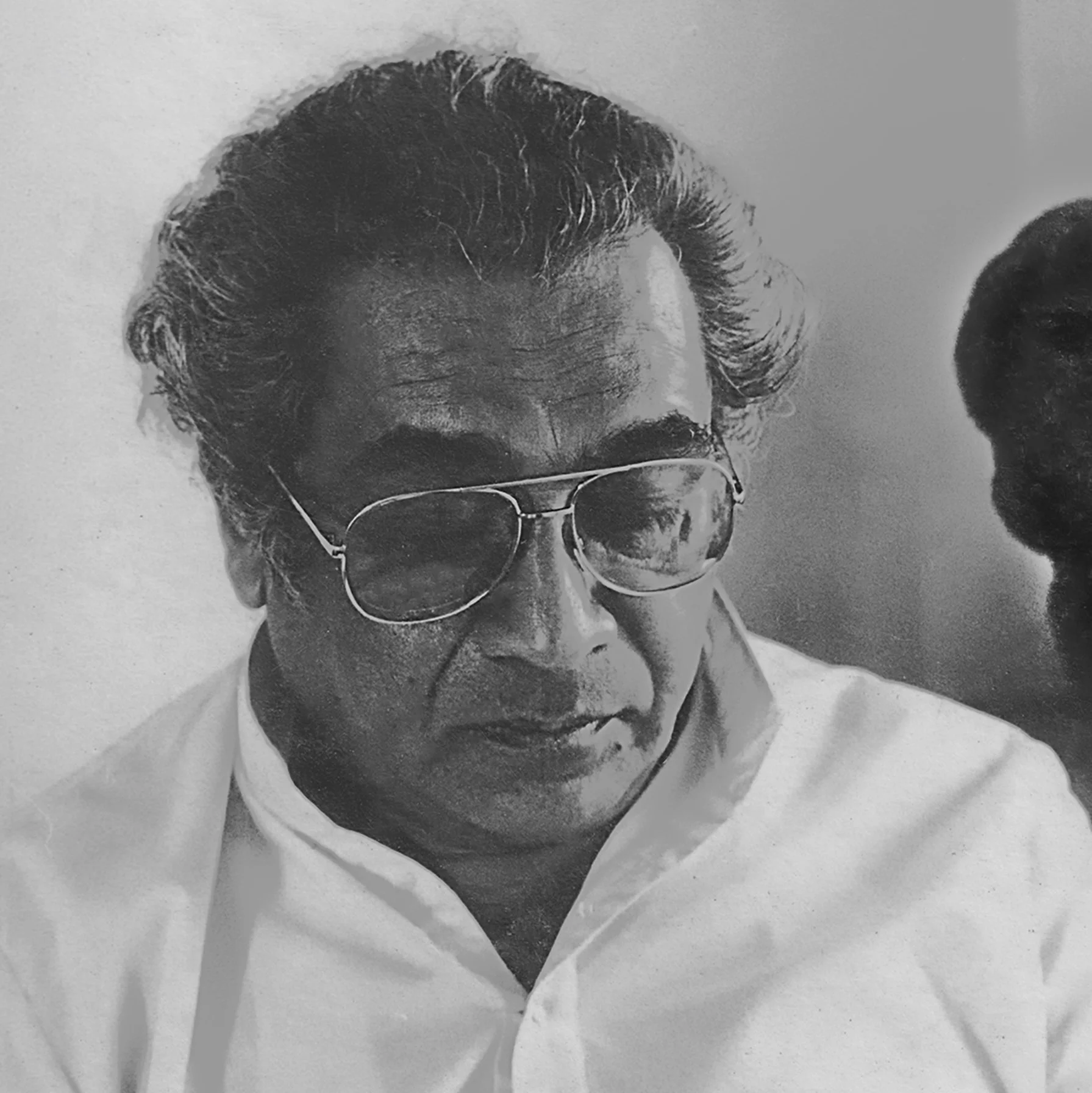
Detail Eidetic stage
Kodak Tri X 400 - D76 - Silver gelatin print
Original
Kodachrome 400
Eidetic Photograph
Kodak T Max 100
-
Style variants are applied downstream of the eidetic reference state. The eidetic photograph remains the anchor. Style is treated as a controlled photographic inscription that prepares the image for a specific publication or exhibition language without destabilising the underlying record.
Research for style variants is concrete and historically situated. For black and white, this includes film response behaviour, grain structure, contrast characteristics, and the tonal logic of period printing and toning practices. For colour, it includes colour process behaviours and how different photographic chains produce distinct saturation, highlight roll off, shadow density, and overall colourimetry.
This matters at archive level. A single reconstructed photograph can be made print ready in multiple ways, but an archive also needs coherence across chronology. Style decisions are therefore governed not only by what looks plausible in isolation, but by how the output sits within the temporal and technical language of the broader corpus, so the reconstructed material can be integrated without breaking historical continuity.
6. Authenticity as alignment
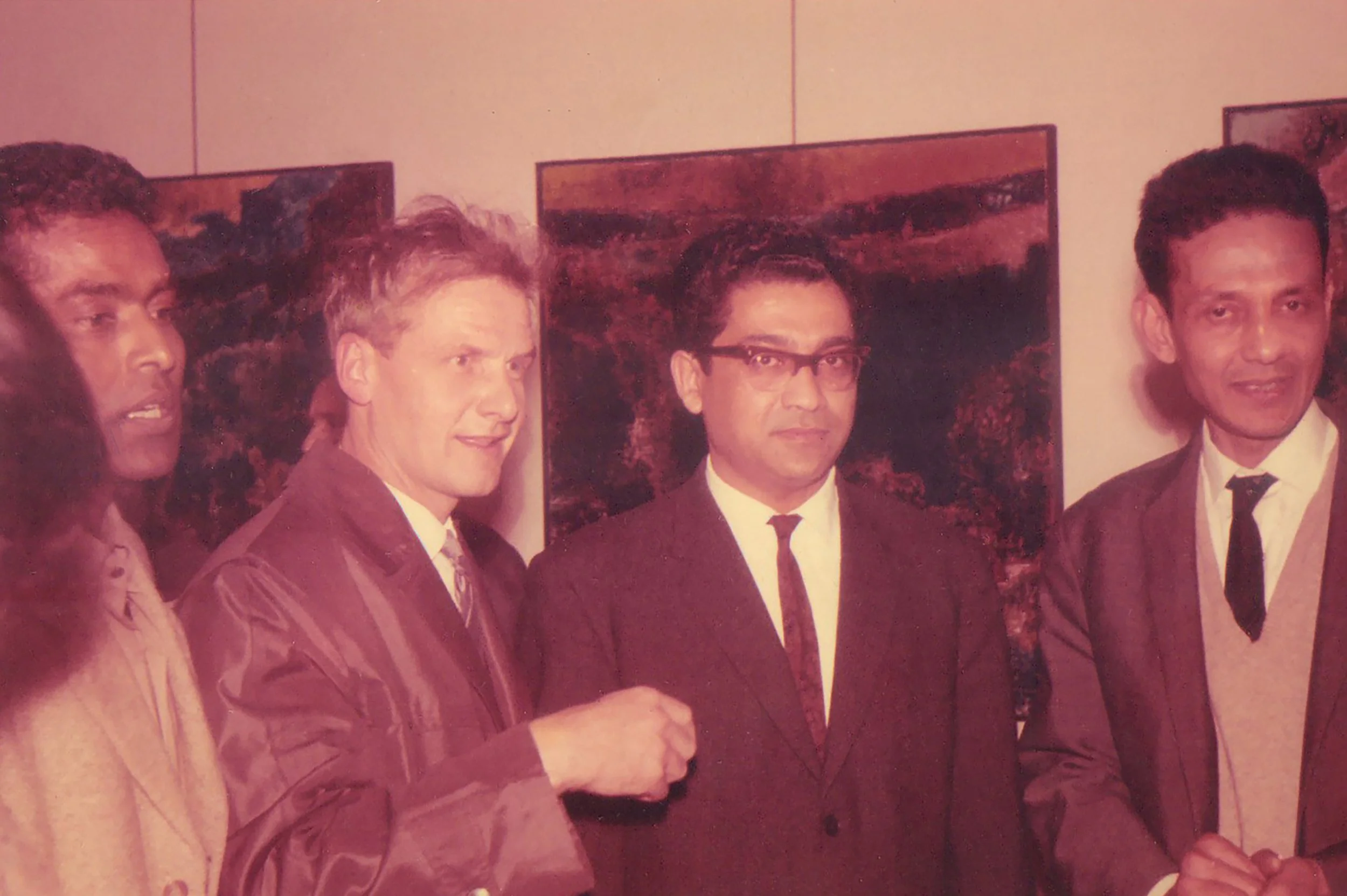
Authenticity is treated as an operational constraint rather than a claim. The reconstructed image remains the same photograph in composition, internal geometry, and object placement, and the workflow is designed to prevent drift into a new picture.
Interventions focus on restoring legibility, continuity, and print readiness while preserving the document’s structural identity.
In practice, this is verified through overlay alignment and continuity checks, so the before and after remain congruent and the visible difference is primarily a recovery of information rather than a re authored scene.
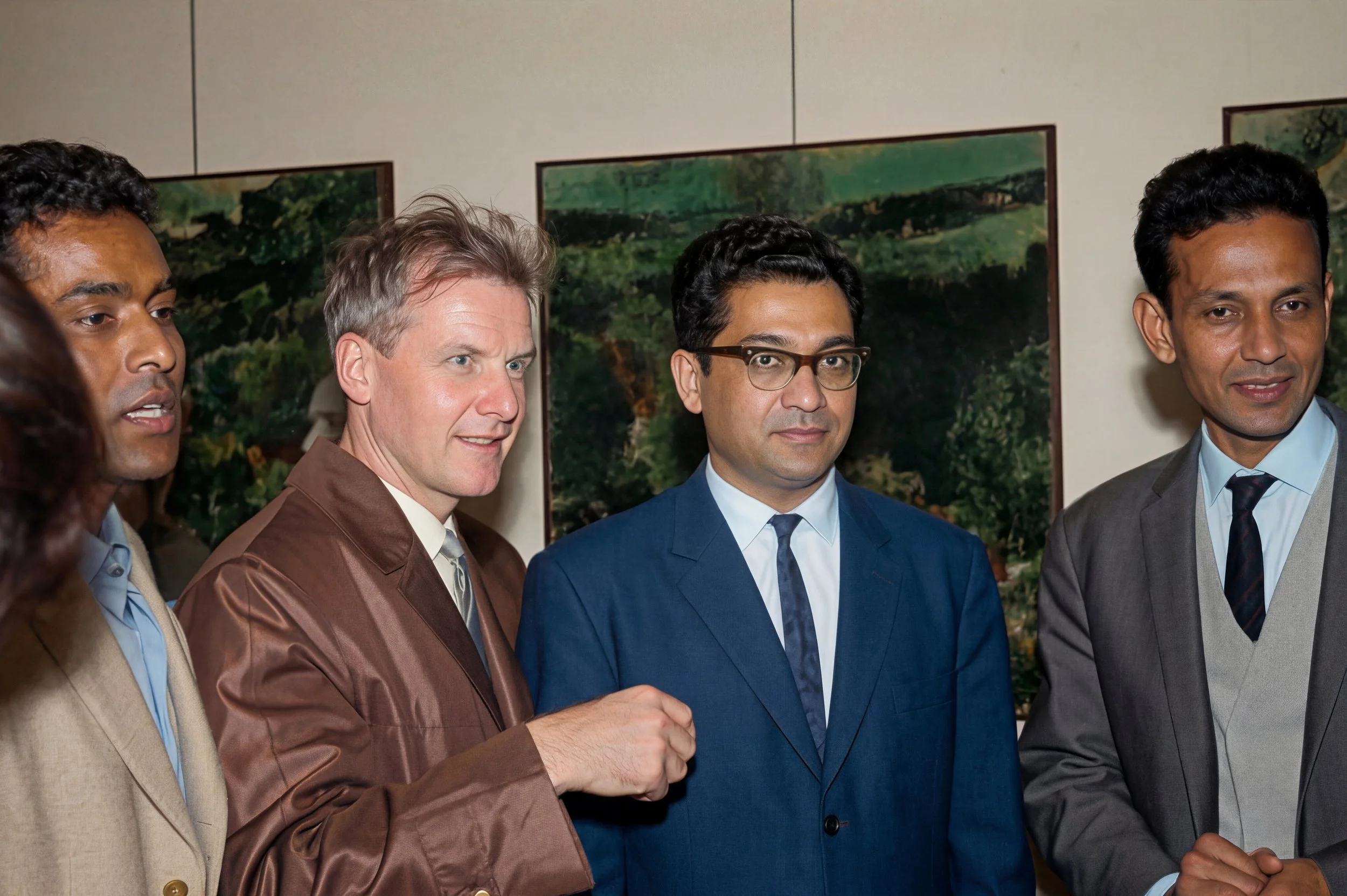
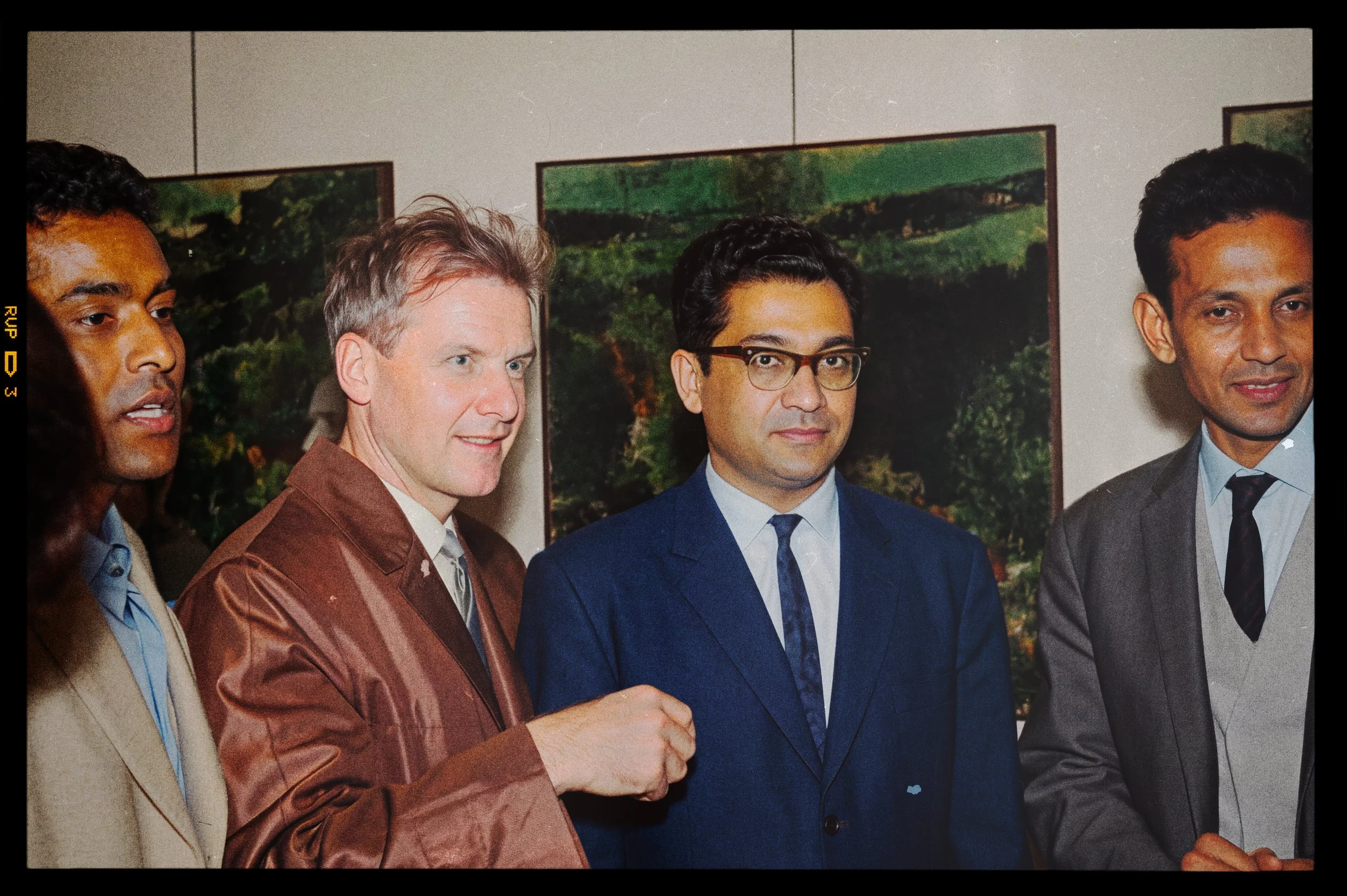
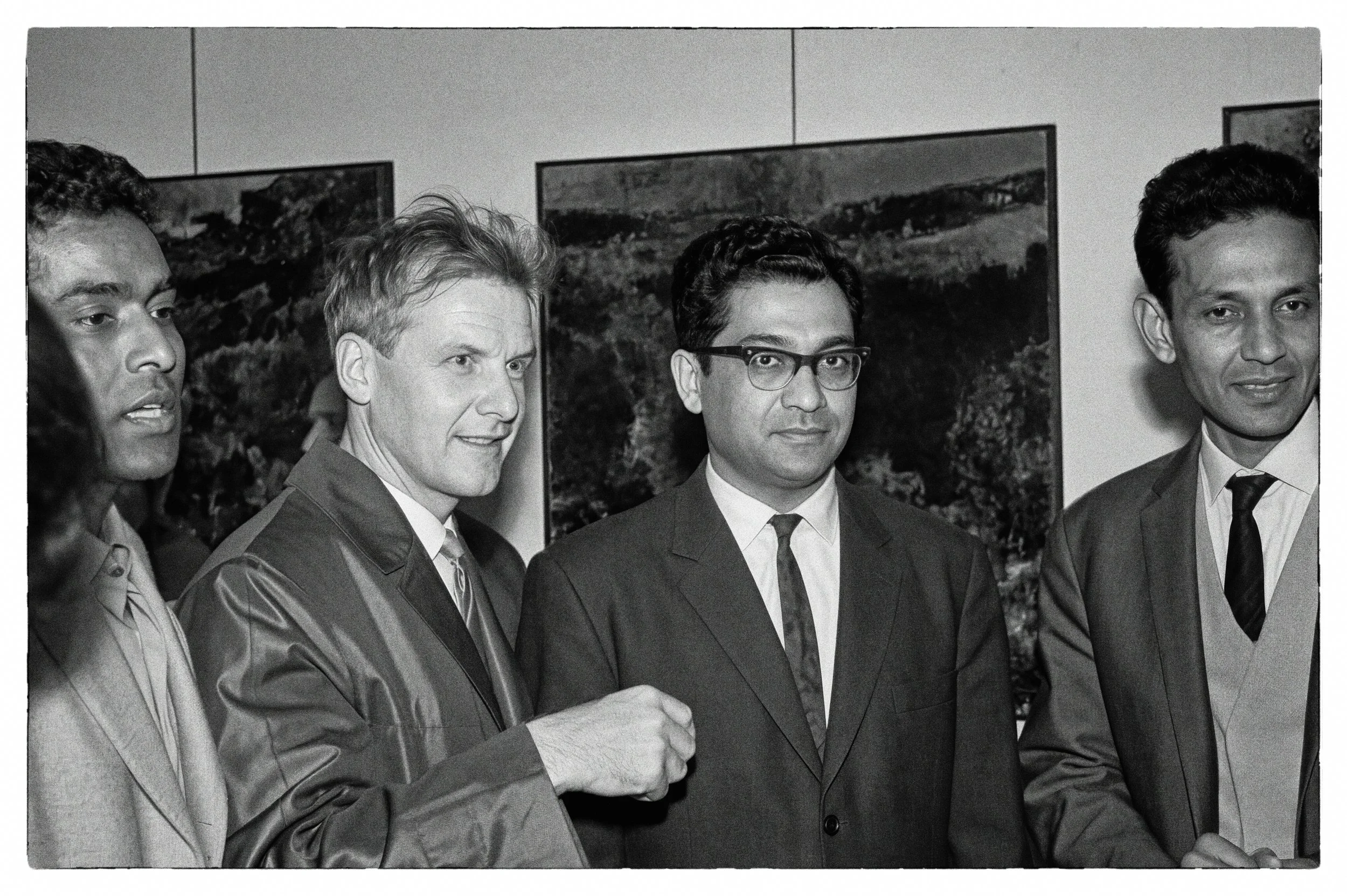
From Left to Right: Original => Eidetic Photograph => Kodakchrome 400 => Kodak T Max 100
7. Curatorial and archival implications
The separation between eidetic reference and downstream styles supports curatorial coherence. It allows decisions about exhibition presentation or publication treatment to be made without altering the recovered photograph itself.
Curators can select a presentation logic suited to a show or a catalogue while preserving structural authenticity and documentary anchoring.
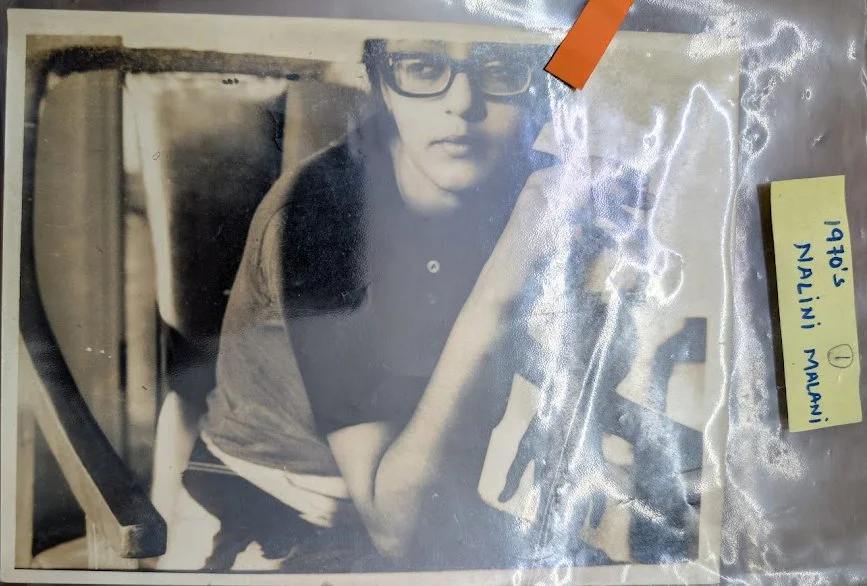
From an archival perspective, the framework supports clear differentiation between reference states and use specific derivatives. The eidetic photograph can be retained as a stable reference within the archive, while style specific outputs can be stored as derivatives associated with particular contexts. This separation supports transparency to audiences and future researchers and reduces the risk of reconstructed images being misread as either untouched documents or unconstrained reinterpretations.
8. Conclusion
Generative Conservation is a documentation led, practice based methodology for reconstructing photographs that survive under conditions of loss. The generative component is defined as constrained reconstruction unfolding through an algorithmic and iterative control process, where models operate as instruments inside a governed pipeline rather than as authors of the image. The studio contribution is situated in hybrid work: documentary research, historical photographic knowledge, coding and model governance, and the production of an eidetic reference state that brings the photograph as close as possible to lived visual conditions while keeping structure, composition, and placement fixed.
As a service, this methodology translates into a repeatable workflow for estates, archives, publishers, and curatorial contexts: assessment of material condition, definition of an intervention scope, reconstruction into print ready masters, and the generation of period coherent style variants aligned with specific publication or exhibition requirements. The same process produces the documentation that makes adoption possible at institutional scale: a conservation note, a curatorial statement, and a technical position paper that records constraints, evidence, and the boundaries of inference. This positions Generative Conservation as both a craft practice and a scalable capability, addressing a growing need for high fidelity archival reconstruction at the moment when collections are digitising rapidly, while the means to reconstruct have matured but still require accountable human governance

Unnisbis.ai: A generative studio philosophy
-
At unnisbis.ai, our work is grounded in the logic of generative art: outcomes are produced through a controlled process of rules, iteration, and selection, rather than a single authored gesture. We treat the system as processual, and the maker’s role as the designer of constraints, criteria, and repetitions that shape what can and cannot emerge.
-
The name draws from the Hindi idiom “unnis bees ka farak”, a small difference that still matters. It frames our focus on the perceptual gap between the real and the almost real, a gap that becomes especially legible in statistical image making where diffusion moves from noise toward order without ever fully collapsing into certainty.
-
This philosophy carries directly into Generative Conservation. We treat variability, error, and near misses as part of the medium, while actively steering the system toward coherence through constraint, judgement, and method. The aim is not to stylise the archive, but to narrow the distance between what survives in damaged material and what the photograph could plausibly contain, keeping results anchored to evidence, process, and historically coherent decisions.