Selected work / Generative Catalogs
We turn garment inputs into brand-aligned catalog imagery across multiple looks, models, moods, and settings.
This is not consumer try-on or generic AI output. It is a visual production approach for brands that need more imagery, more variation, and a more flexible aesthetic language than a standard shoot usually allows.
The examples below are independent concept studies using publicly available brand references. They were created to demonstrate our generative catalog workflow and are not commissioned projects.
Concept study · Fashion
A generative catalog language shaped by art, tailoring, and controlled eccentricity.
The exercise is not simply to place a garment on a model. It is to build a visual world that feels precise, offbeat, sculptural, and culturally aware — while keeping the image unmistakably within the brand's aesthetic language.
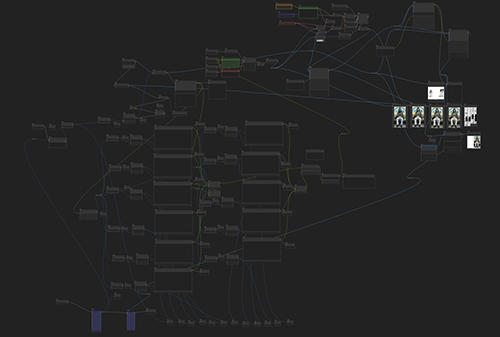
Each look starts with a full outfit pulled from the brand's website. We gather the individual garments, rebuild them as a laid-flat composite, and feed that into our try-on workflow.
The results shown here are part of a generative catalog created from laid-flat outfit composites.
Concept study · Fashion
A generative catalog system built around fit, individuality, and modern Mumbai tailoring.
The point is clarity, refinement, and variation within a precise tailoring language: the same product world extended across multiple men, moods, and everyday urban situations.
Outfit composite inputs
Generative catalog outputs
Each catalog is developed as a bespoke generative system, shaped around the visual language of a specific brand — so the aesthetic direction can be tuned, adjusted, and extended for the garment, the mood, and the final use.
A generative system built around one brand's visual language, not a generic output.
Aesthetic direction adjusted and extended, look by look.
Clothing, styling and mood adapted to the desired output and end use.